Teleporio™ — Greek Island Travel Intelligence
Look Closer
Question-led stories about Greek archaeology, philosophy, music, faith, food, the Olympics and everyday culture — each connected to a place you can visit.
Greece is full of things visitors photograph without being told what they are seeing. Look Closer begins with the question behind the object, ritual, song, name or public habit — then connects the answer to a place you can visit.
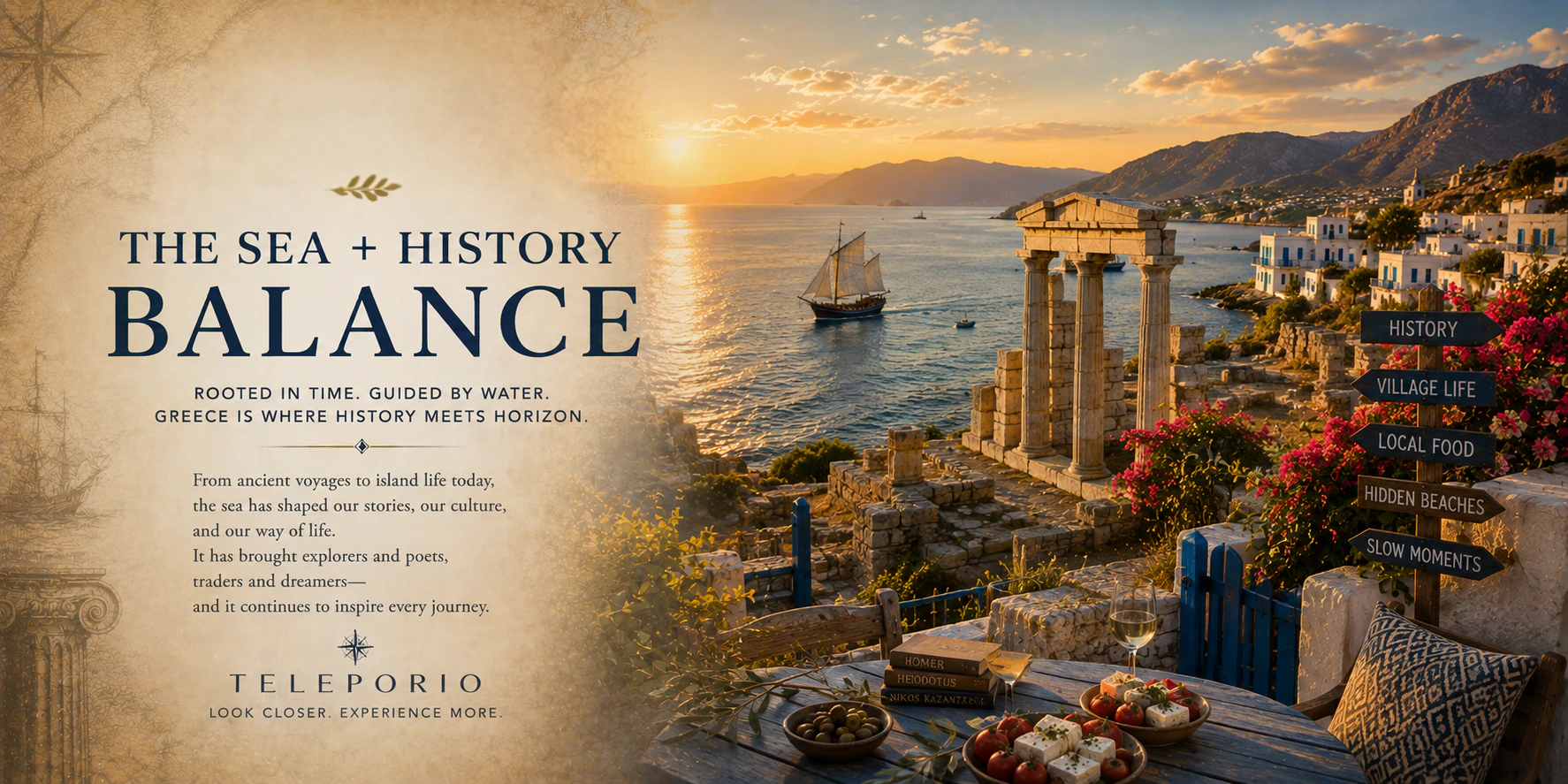
Question-led stories about Greece
These stories distinguish documented history from ancient literary tradition, religious belief, scholarly interpretation and modern commemoration. Sources are shown on every story, and existing Teleporio cultural articles keep their original canonical addresses.
Symbols
Why is there an owl everywhere in Athens?
On coins, on souvenirs, carved above doorways — the owl is Athens's oldest symbol. Here is why the bird of Athena still watches over the city.
Look closer →Archaeology
Why can you see ruins beneath your feet at the Acropolis Museum?
Look down when you walk in. Beneath the glass floor is another Athens — older, quieter, and still there.
Look closer →Archaeology
Why is the Acropolis built on a rock?
The rock wasn't just convenient. It was strategic, sacred and symbolic — and the choice shaped Athens for three thousand years.
Look closer →Architecture
Why isn't the Parthenon perfectly straight?
Every horizontal line bows slightly upward. Every column leans slightly inward. The Parthenon is one of the most precisely calculated optical illusions ever built.
Look closer →Philosophy
Who was Socrates — and why does he still matter?
He wrote nothing. He charged no fee. He was put to death by the city he loved. And he changed how the world thinks.
Look closer →Philosophy
Who was Plato — and what did he build that lasted?
He was Socrates's student and Aristotle's teacher. He founded the first institution of higher learning in the Western world. And he wrote some of the most beautiful philosophy ever committed to words.
Look closer →Philosophy
Who was Aristotle — and how did he shape everything?
He studied under Plato, tutored Alexander the Great, and then set up a school that classified the natural world, codified logic and founded biology, politics and literary criticism.
Look closer →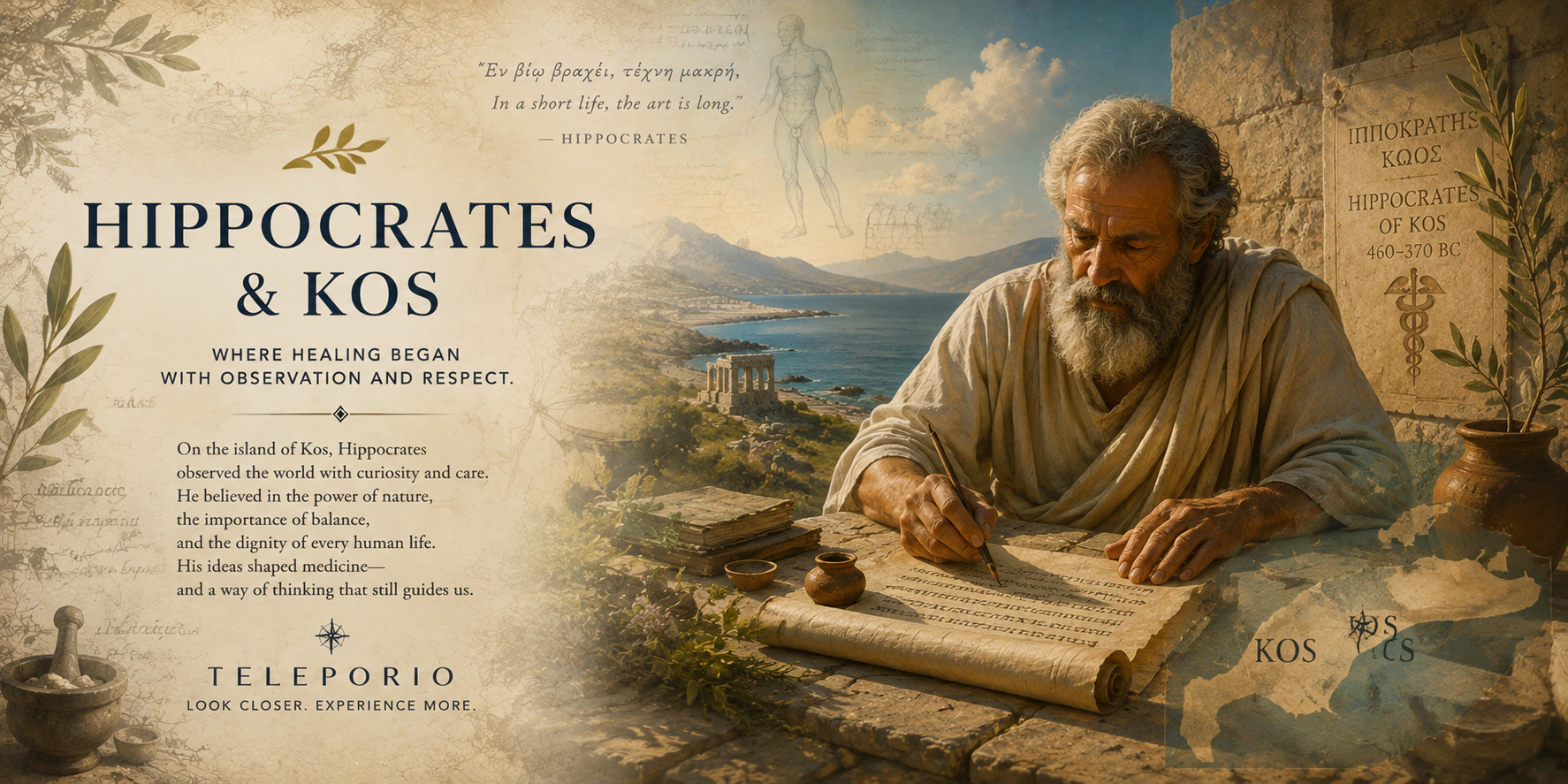
Original Teleporio editorial artwork
Medicine
Who was Hippocrates — and why does his name still mean something?
He was a physician from Kos who, around the fifth century BC, insisted that illness had natural causes. That idea changed medicine.
Look closer →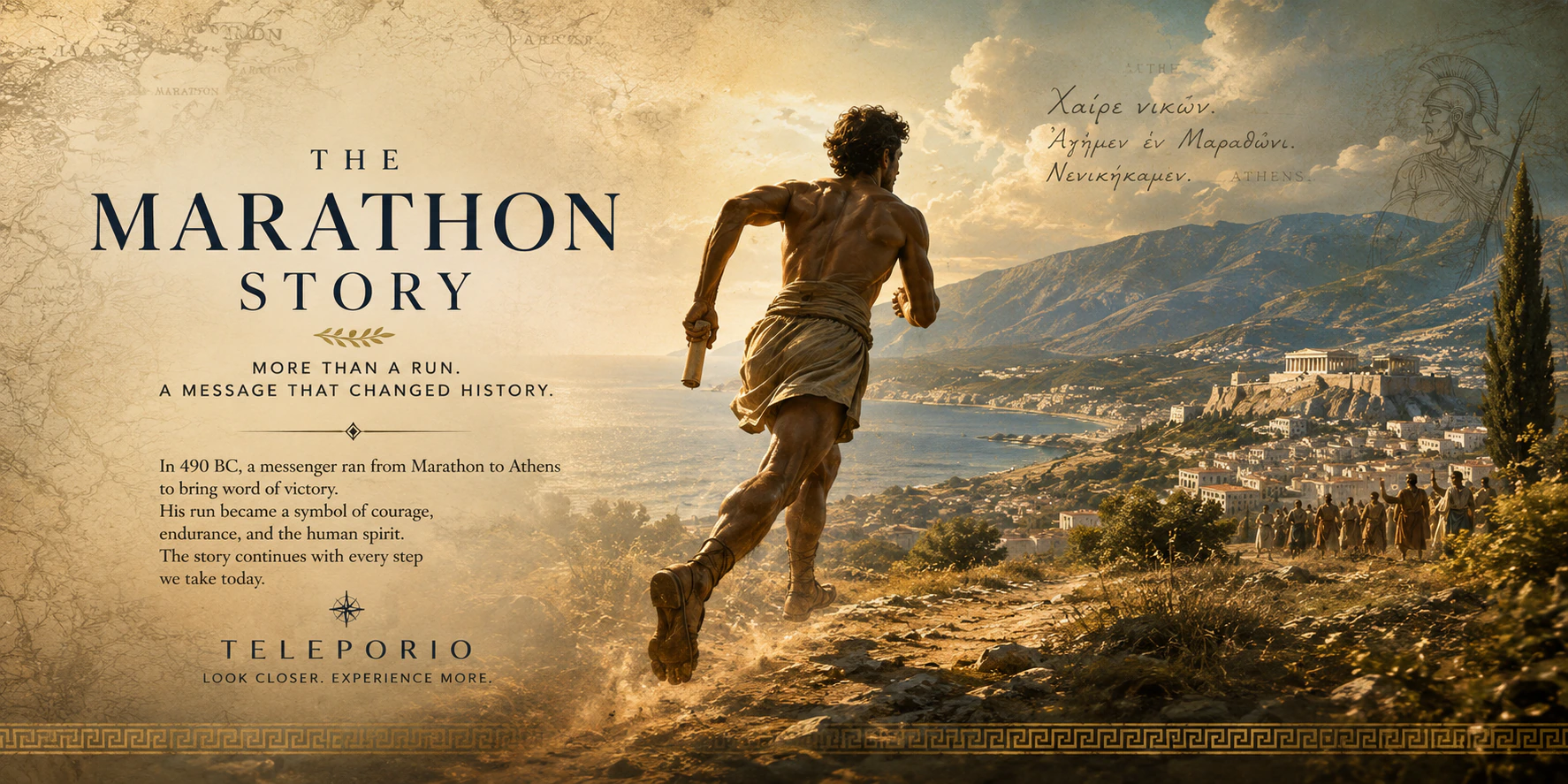
Original Teleporio editorial artwork
Olympics
Where did the marathon come from?
A battle, a messenger, a legend, and a race invented for the first modern Olympics. The marathon is one of sport's most layered stories — and not everything in it is what it seems.
Look closer →Original Teleporio editorial artwork
Olympics
Who was Pheidippides?
He ran from Athens to Sparta and back before the Battle of Marathon. The race that bears his legend is 42 kilometres. His actual run may have been over 480.
Look closer →Olympics
Who was Spyros Louis?
A Greek water carrier who won the first modern Olympic marathon in 1896 and became one of sport's most enduring national symbols — almost entirely by accident.
Look closer →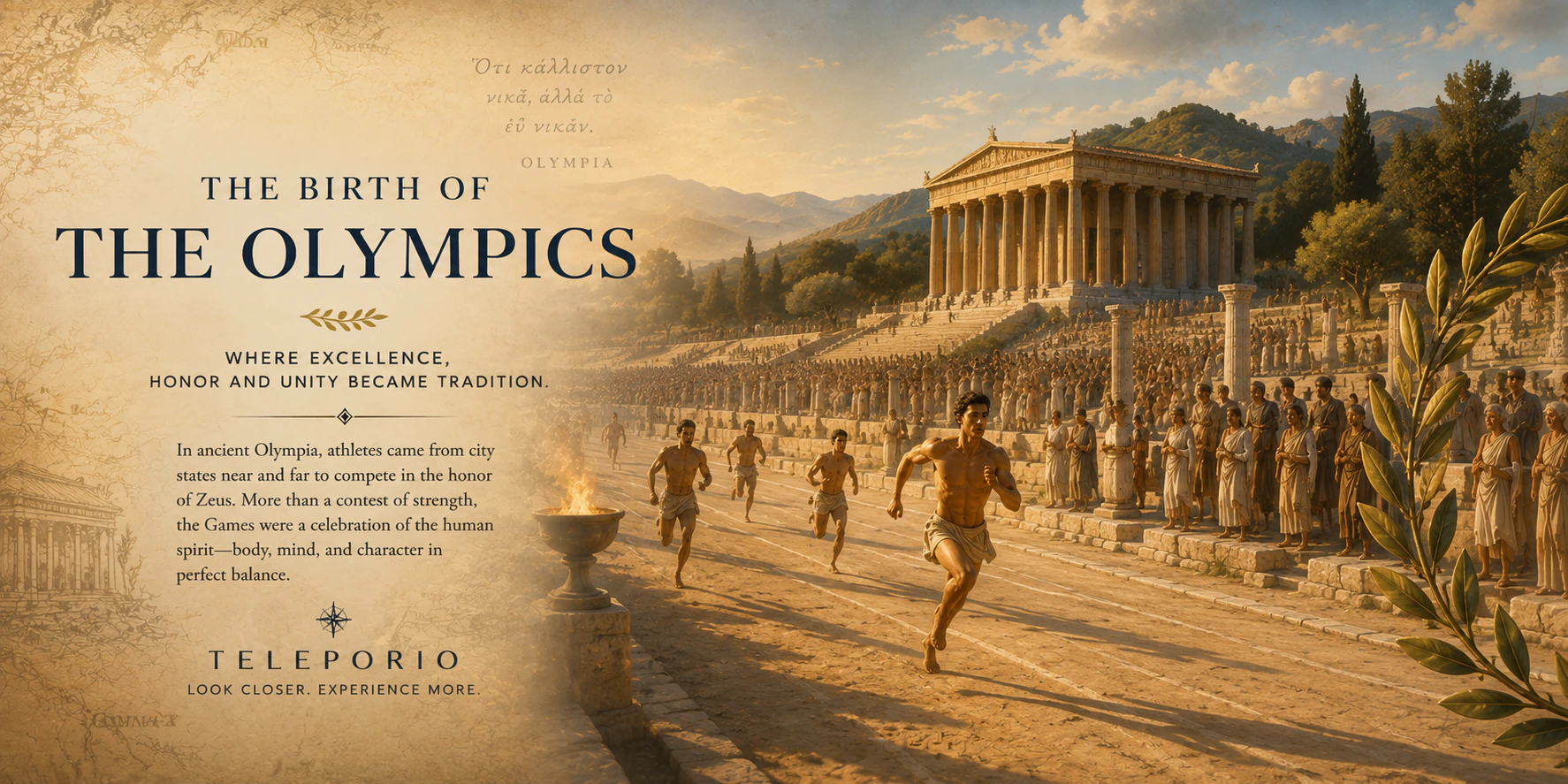
Original Teleporio editorial artwork
Olympics
Why did the Olympics begin in Greece?
They began in Olympia around 776 BC as a religious festival in honour of Zeus, and they ran for over a thousand years. The modern Games inherited their name, their values and their site.
Look closer →Original Teleporio editorial artwork
Olympics
What were the ancient Olympic Games really like?
Thousands of spectators, olive wreaths for winners, no women allowed in competition, and a sacred truce across the Greek world. The ancient Games were unlike anything the modern Olympics resembles — except in the things that matter most.
Look closer →Original Teleporio editorial artwork
Olympics
Why does the Olympic flame begin in Greece — and what is the difference between the ancient sacred fire and the modern torch relay?
The flame ceremony at Olympia is genuinely moving. But it is important to know that it is a modern creation, not an ancient one — and why that distinction makes it more interesting, not less.
Look closer →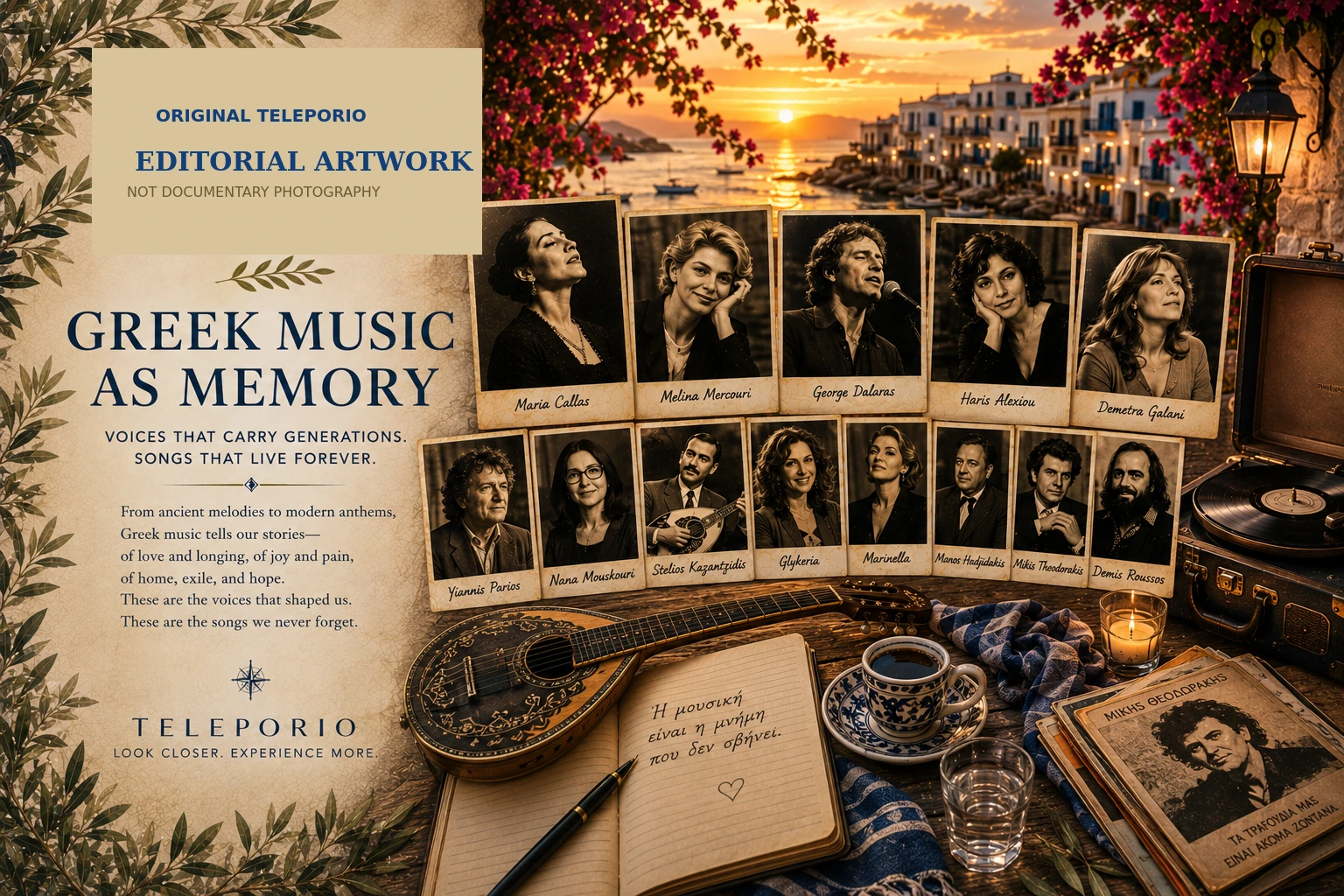
Original Teleporio editorial artwork
Music
Who was Maria Callas?
She was born in New York, raised in Athens during the occupation, and became the most celebrated operatic soprano of the twentieth century. Her voice changed what opera was allowed to feel.
Look closer →Original Teleporio editorial artwork
Music
Who is Haris Alexiou — and what does her music say about Greece?
She came from difficult beginnings in Thebes, rose to become one of the most beloved voices in Greek music, and her songs sit at the place where personal life and national feeling meet.
Look closer →Original Teleporio editorial artwork
Music
Who is Yiannis Parios — and why is he associated with Paros?
He is one of the most beloved singers in modern Greek music, and his connection to the island of Paros runs from his birth name to his deepest loyalties.
Look closer →Original Teleporio editorial artwork
Music
Why is Mikis Theodorakis so important to Greece?
He composed Zorba the Greek and the Cavafy songs. He was imprisoned during the junta. He is the composer whose music became the sound of Greece's conscience.
Look closer →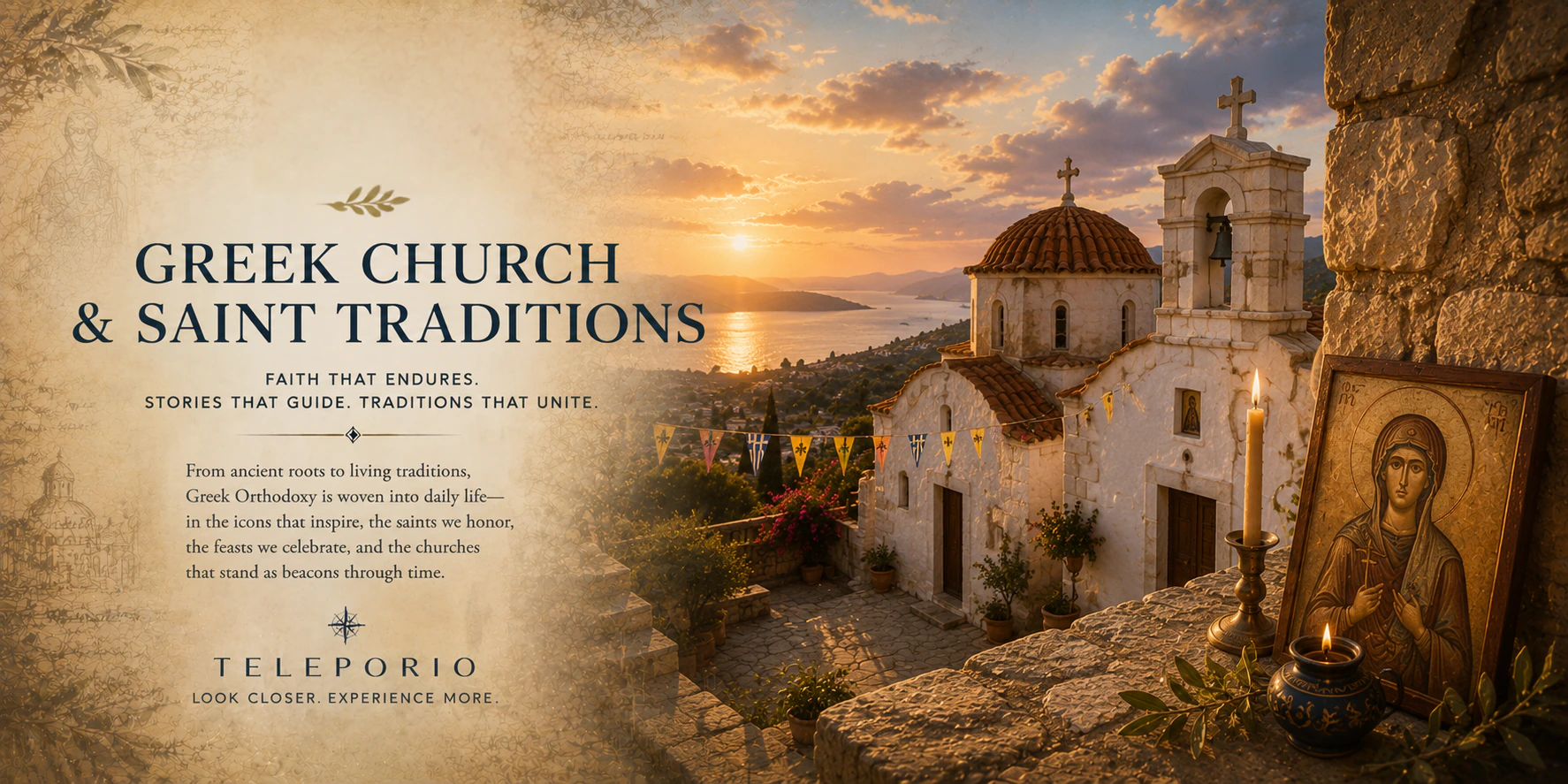
Original Teleporio editorial artwork
Saints & Tradition
Why are Greek churches named after particular saints?
Before it was a building, it was a person. Understanding why a church carries a particular name turns every chapel in Greece into a story you can read.
Look closer →Original Teleporio editorial artwork
Saints & Tradition
Why do people ask saints for help?
Someone came here because they needed something. Understanding why — and what the Orthodox tradition actually teaches about this — transforms how you read every candle, every icon, every small church.
Look closer →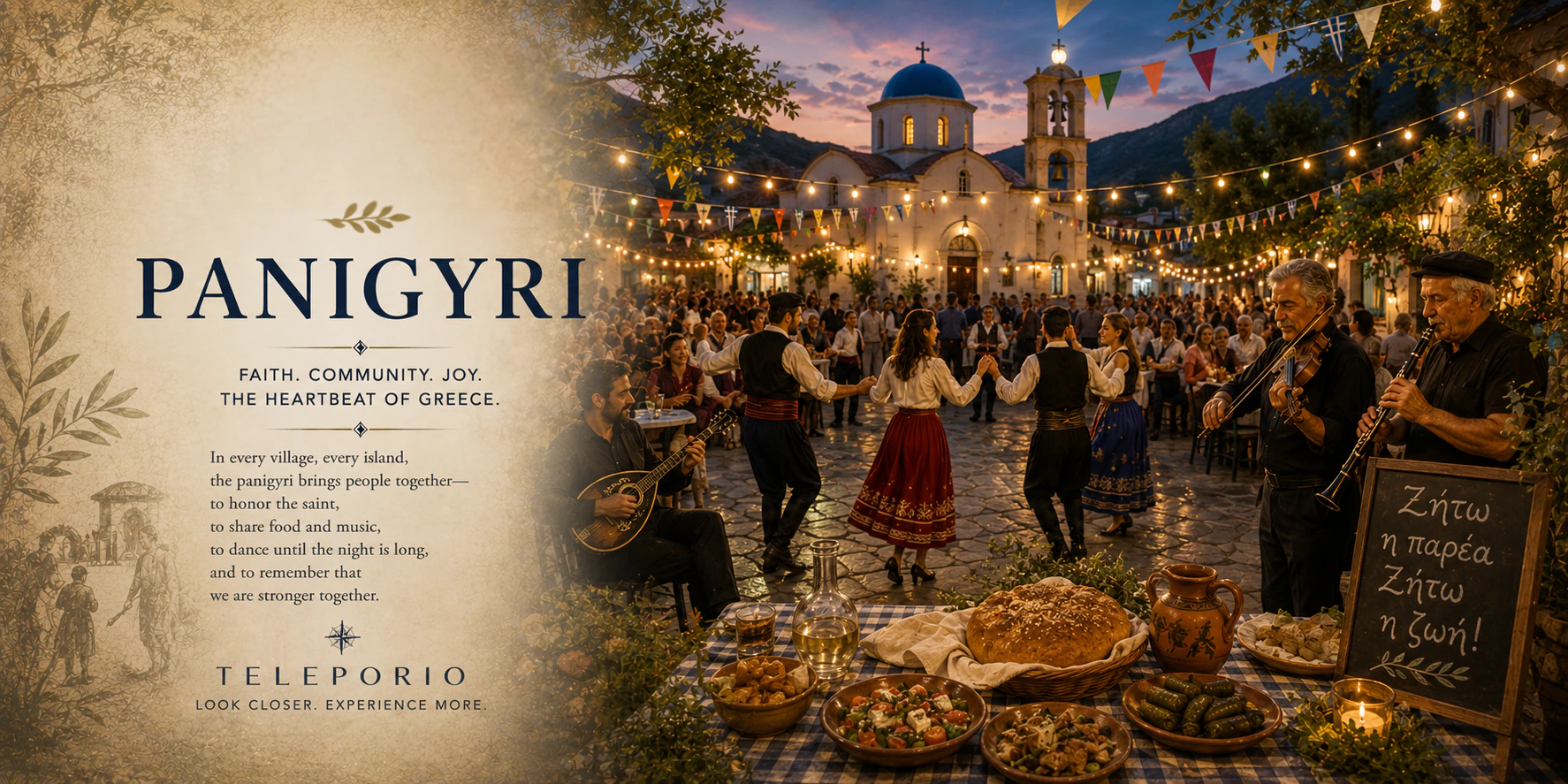
Original Teleporio editorial artwork
Saints & Tradition
What is a Greek panigyri?
A feast day, an all-night celebration, music and dancing in the village square. The panigyri is how a community celebrates the saint it belongs to — and how it remembers what it is.
Look closer →Architecture
Why is the Parthenon important?
More than a temple, more than a ruin — the Parthenon is the defining monument of Western civilisation's self-understanding. Here is why it still matters.
Look closer →Architecture
Why are the Caryatids women?
Six marble women hold up a roof on the Acropolis. Two and a half thousand years of architecture, and nothing has quite repeated what the ancient Greeks did here.
Look closer →People
Who was Melina Mercouri — and what did she fight for?
Actress, exile, Minister of Culture. She turned the Parthenon Sculptures into a cause the world could not ignore.
Look closer →Symbols
Why is the olive tree a symbol of Athens?
A practical crop, a sacred gift and a civic emblem: the olive tree links the story Athens told about Athena to the landscape and economy around the city.
Look closer →The Lived Greece
For music, faith, food, village life and the people who carried Greece with them, continue into The Lived Greece — the companion collection about culture as something practised rather than displayed.