Teleporio™ — Greek Island Travel Intelligence
Why does the Olympic flame begin in Greece — and what is the difference between the ancient sacred fire and the modern torch relay?
The flame ceremony at Olympia is genuinely moving. But it is important to know that it is a modern creation, not an ancient one — and why that distinction ma…
Teleporio™ travel intelligence — Updated 2026-07-24
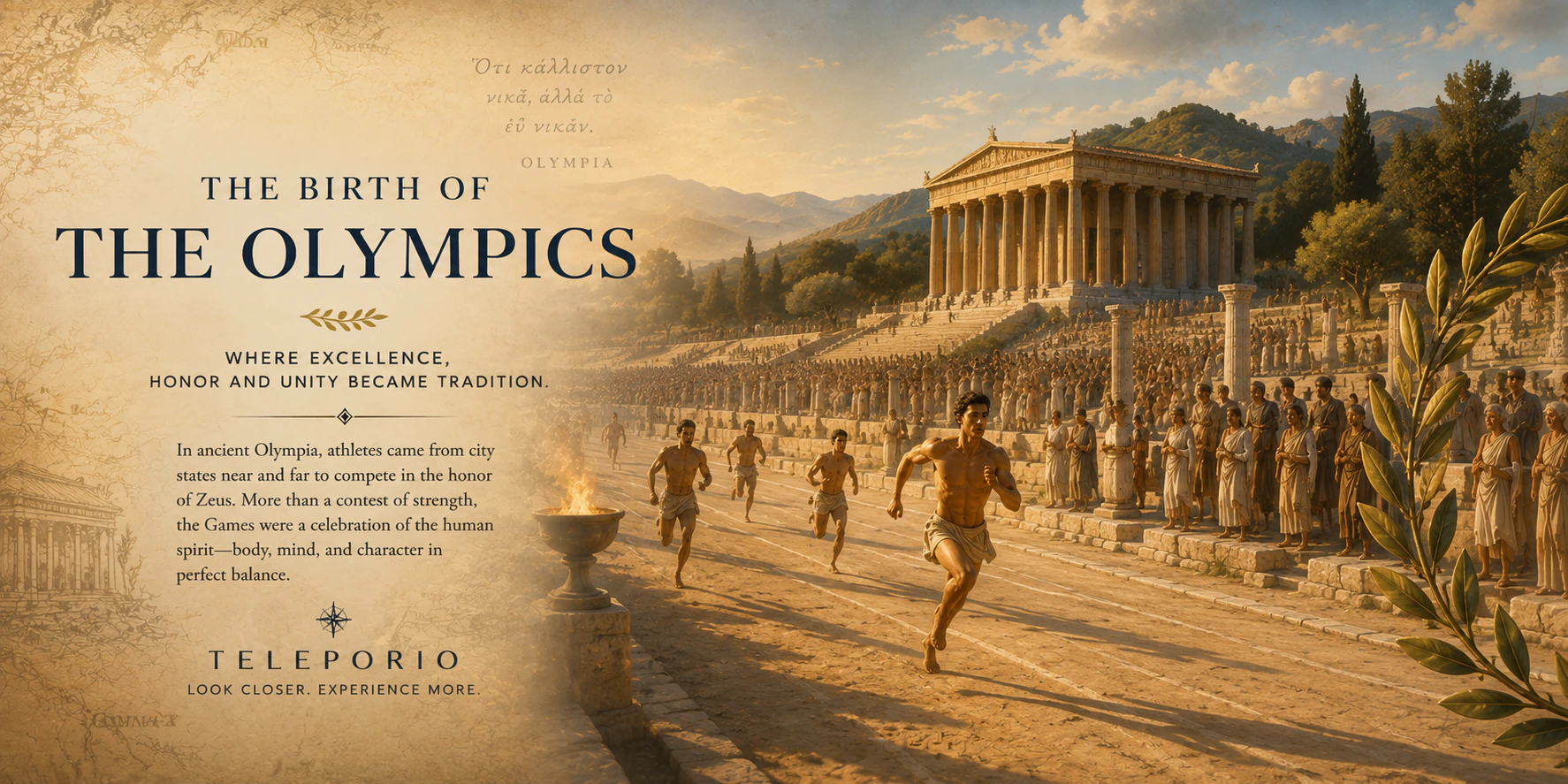
The torch relay from Olympia to the host city is a modern ceremony, first used at the 1936 Berlin Games. The ancient Olympics had sacred fires, but nothing resembling a torch relay. Knowing the distinction makes the modern ceremony more interesting — not less meaningful.
The ceremony at Olympia
Before each Olympic Games, a ceremony is held at the ruins of the ancient sanctuary of Hera (the Heraion) at Olympia. A group of performers dressed as ancient priestesses use a parabolic mirror to focus sunlight and ignite a flame — a process that depends on a clear day and occasionally requires a backup flame when clouds interfere. The flame is then passed to the first torch bearer in a relay that ultimately carries it to the host city of the Games. The ceremony is the most direct physical link between the ancient world and the modern Olympics, held on the same ground where the ancient Games took place.
What is historical and what is modern
The ancient Olympics had sacred fires. The great altar of Zeus at Olympia — a massive mound built from centuries of accumulated sacrificial ash — was a living fire of ancient religious practice. The eternal flame of Hestia, goddess of the hearth, also burned in sacred spaces throughout Greece. Fire was deeply sacred in ancient Greek religion, and Olympia was no exception. But there is no documented ancient practice of a torch relay carrying a specific Olympic flame from Greece to a host city. The ancient Games were held at Olympia, and the sacred fires burned at Olympia. The idea of a relay carrying the flame outward to other places is a modern invention.
The 1936 origins
The modern torch relay was first introduced at the 1936 Berlin Olympics, organised by Carl Diem under the direction of the Nazi regime. The ceremony was partly designed to create a symbolic connection between ancient Greece and modern Germany, serving propaganda aims as well as a genuine aesthetic vision. The flame was lit at Olympia and relayed by runners across several countries to Berlin's Olympic stadium. The relay became a fixture of the modern Games and has been part of every Olympics since, though the ceremony was redesigned by the IOC over time to remove its associations with the 1936 context and to make the Olympia lighting ceremony its clearly defined centrepiece.
Why it remains meaningful
Knowing that the torch relay is a twentieth-century creation does not diminish it — and may deepen it. The ceremony was designed to create a living symbolic connection between the ancient and modern worlds, and it succeeds: the flame is genuinely lit at Olympia, on the ancient ground, by a process that requires the sun over Greece. Every four years, a fire that began in the valley where the ancient Games were held travels to wherever in the world the Games will be held next. The choice of Olympia as the origin of the flame is not historical pedantry. It is a statement that the ancient spirit of peaceful competition is the foundation the modern Games is built on.
Visiting Olympia before an Olympic year
The Heraion at Olympia — the ancient Temple of Hera where the ceremony takes place — is open to visitors as part of the archaeological site. Standing in the ruins, you can identify the same stones that appear in the Olympic ceremony footage every four years. If you visit in a year when the Games are being held, the ceremony takes place in the spring before the summer Olympics. The valley of Olympia is green and quiet for most of the year, and the sanctuary is one of the most rewarding archaeological sites in Greece to visit without crowds.
What is certain — and what is interpretation
The modern Olympic flame ceremony at Olympia and the torch relay are clearly documented twentieth-century creations. Ancient sacred fires at Olympia are attested but were distinct from the modern ceremony. The IOC's own history makes these distinctions.
Go See It
Ancient Heraion and sanctuary of Olympia, Peloponnese
The Heraion is within the main archaeological site. Stand near the surviving columns of the temple to understand the scale of the ceremony. The museum's display of the ancient torch and fire-related objects from Olympia provides context for the sacred fire traditions. Check the IOC website before visiting for ceremony dates in Olympic years.