Teleporio™ — Greek Island Travel Intelligence
The Lived Greece
Meet Greece through the songs, rituals, village celebrations, artists and shared practices that keep its culture alive beyond the monuments.
The Lived Greece follows culture beyond monuments: into songs, saint days, village squares, family tables, public memory and the work of people whose art travelled farther than they did.
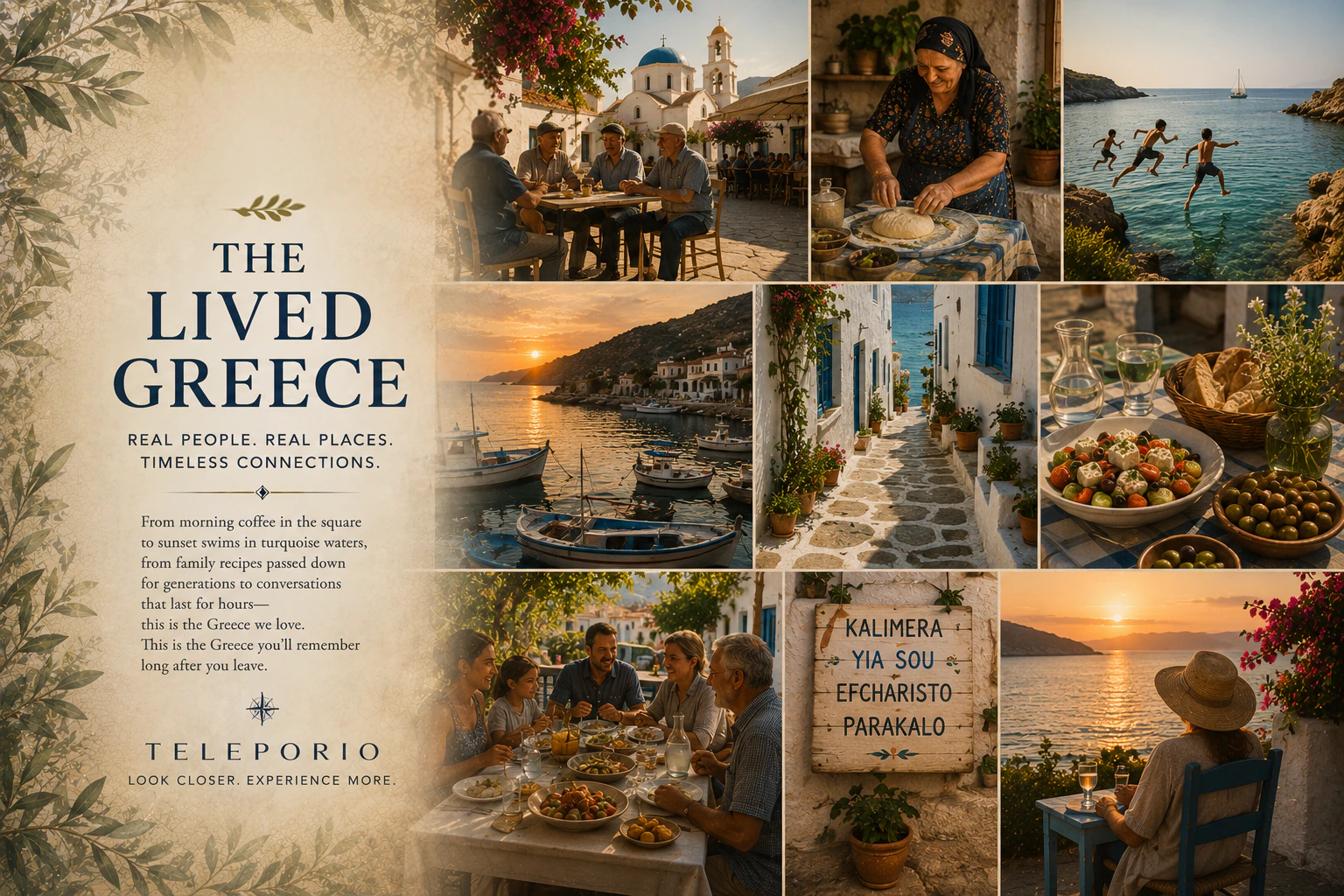
Culture that is still being lived
This collection does not present belief as scientific fact or turn living practice into folklore. It explains what can be verified, names tradition as tradition, and leaves space for Greeks to describe their own culture when first-person material has been properly sourced and consented.
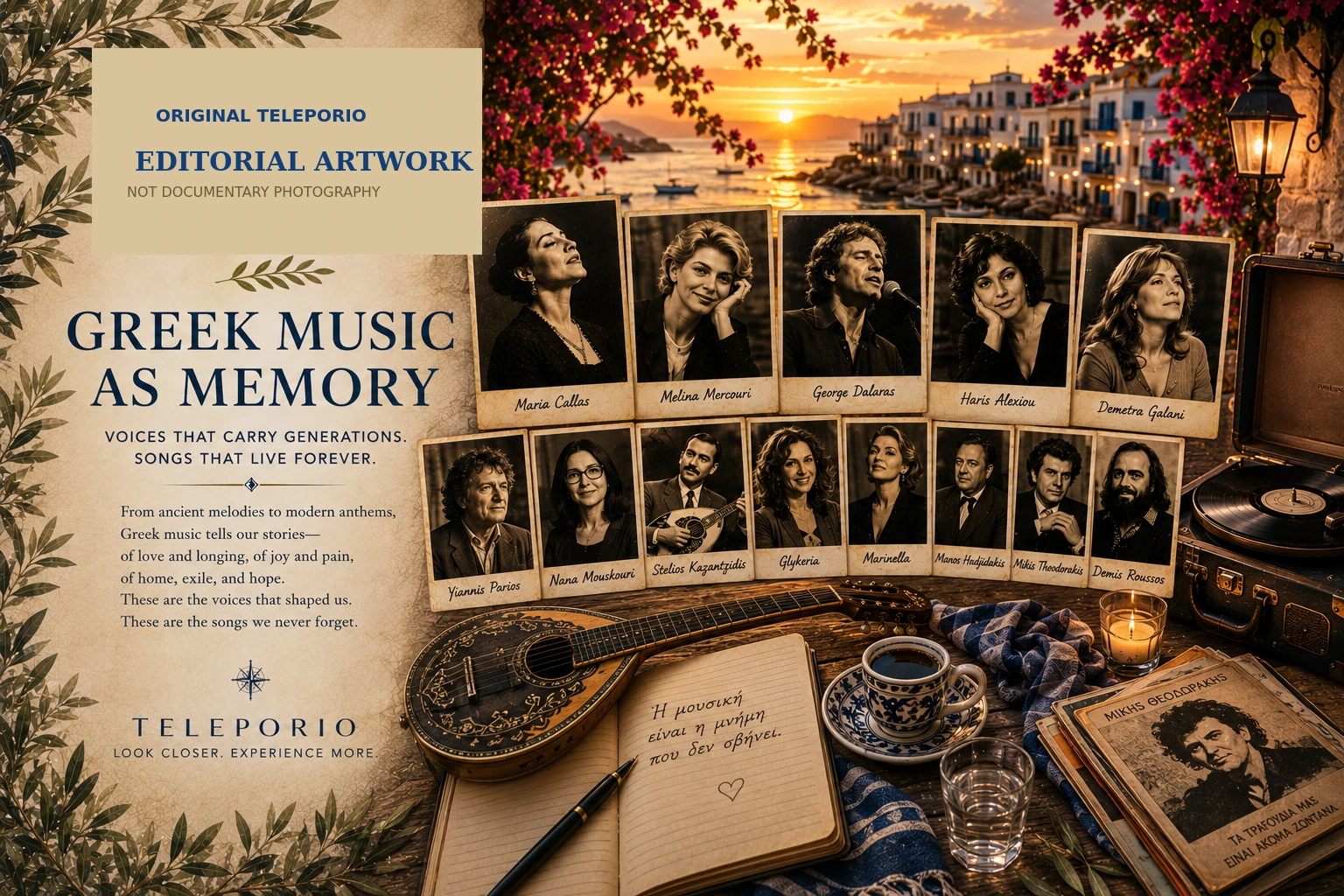
Original Teleporio editorial artwork
Music
Who was Maria Callas?
She was born in New York, raised in Athens during the occupation, and became the most celebrated operatic soprano of the twentieth century. Her voice changed what opera was allowed to feel.
Look closer →Original Teleporio editorial artwork
Music
Who is Haris Alexiou — and what does her music say about Greece?
She came from difficult beginnings in Thebes, rose to become one of the most beloved voices in Greek music, and her songs sit at the place where personal life and national feeling meet.
Look closer →Original Teleporio editorial artwork
Music
Who is Yiannis Parios — and why is he associated with Paros?
He is one of the most beloved singers in modern Greek music, and his connection to the island of Paros runs from his birth name to his deepest loyalties.
Look closer →Original Teleporio editorial artwork
Music
Why is Mikis Theodorakis so important to Greece?
He composed Zorba the Greek and the Cavafy songs. He was imprisoned during the junta. He is the composer whose music became the sound of Greece's conscience.
Look closer →Original Teleporio editorial artwork
Music
Who is Nana Mouskouri — and how did a Greek voice travel so far?
From wartime childhood and conservatory training in Athens to recordings in many languages, Nana Mouskouri carried a recognisably Greek musical identity into an international career.
Look closer →Original Teleporio editorial artwork
Music
Who is Dimitra Galani — and why does her music resist one category?
A singer, composer and producer since her teens, Dimitra Galani has connected the great postwar songwriters to jazz, rock and new generations of Greek musicians.
Look closer →Original Teleporio editorial artwork
Music
Who is Glykeria — and what histories travel in her songs?
From village songs and Byzantine hymns in Serres to Smyrnaic, rebetiko and laïko stages around the world, Glykeria's repertoire carries several Greek musical memories at once.
Look closer →Original Teleporio editorial artwork
Music
Who was Stelios Kazantzidis — and why did migrants hear themselves in his voice?
Born in an Athenian refugee neighbourhood, Stelios Kazantzidis became a defining laïko singer of work, poverty, separation and xenitia — life away from home.
Look closer →Original Teleporio editorial artwork
Music
Who was Manos Hadjidakis — and how did he change the way Greece heard itself?
He defended rebetiko when polite society dismissed it, wrote an Oscar-winning song for Never on Sunday, and helped shape the modern Greek art-song tradition.
Look closer →Original Teleporio editorial artwork
Music
Who was Demis Roussos — and what made his music Mediterranean?
Born in Alexandria, remade in Athens and launched from Paris with Aphrodite's Child, Demis Roussos turned migration and a singular high tenor into international pop.
Look closer →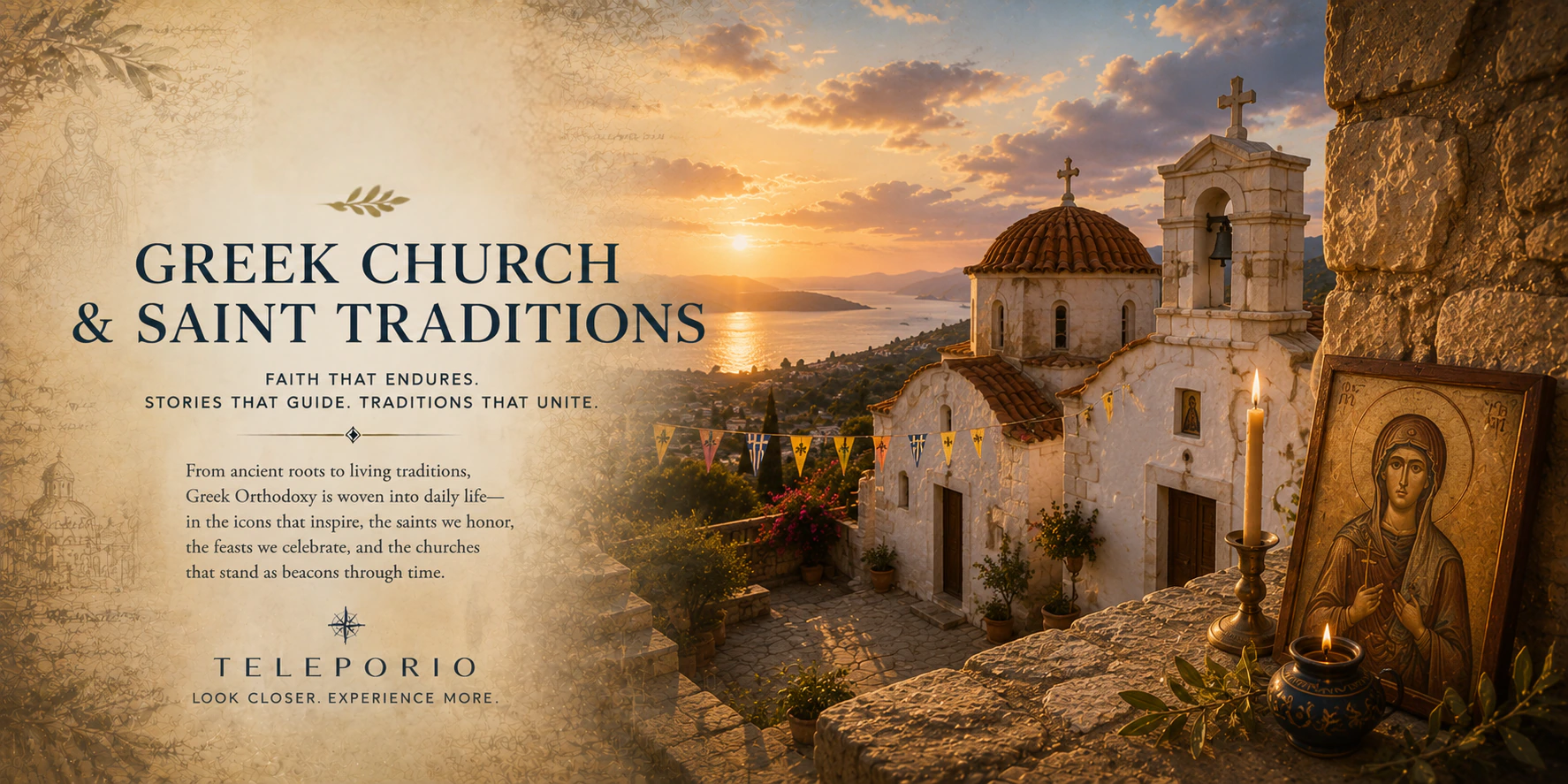
Original Teleporio editorial artwork
Saints & Tradition
Why are Greek churches named after particular saints?
Before it was a building, it was a person. Understanding why a church carries a particular name turns every chapel in Greece into a story you can read.
Look closer →Original Teleporio editorial artwork
Saints & Tradition
Why do people ask saints for help?
Someone came here because they needed something. Understanding why — and what the Orthodox tradition actually teaches about this — transforms how you read every candle, every icon, every small church.
Look closer →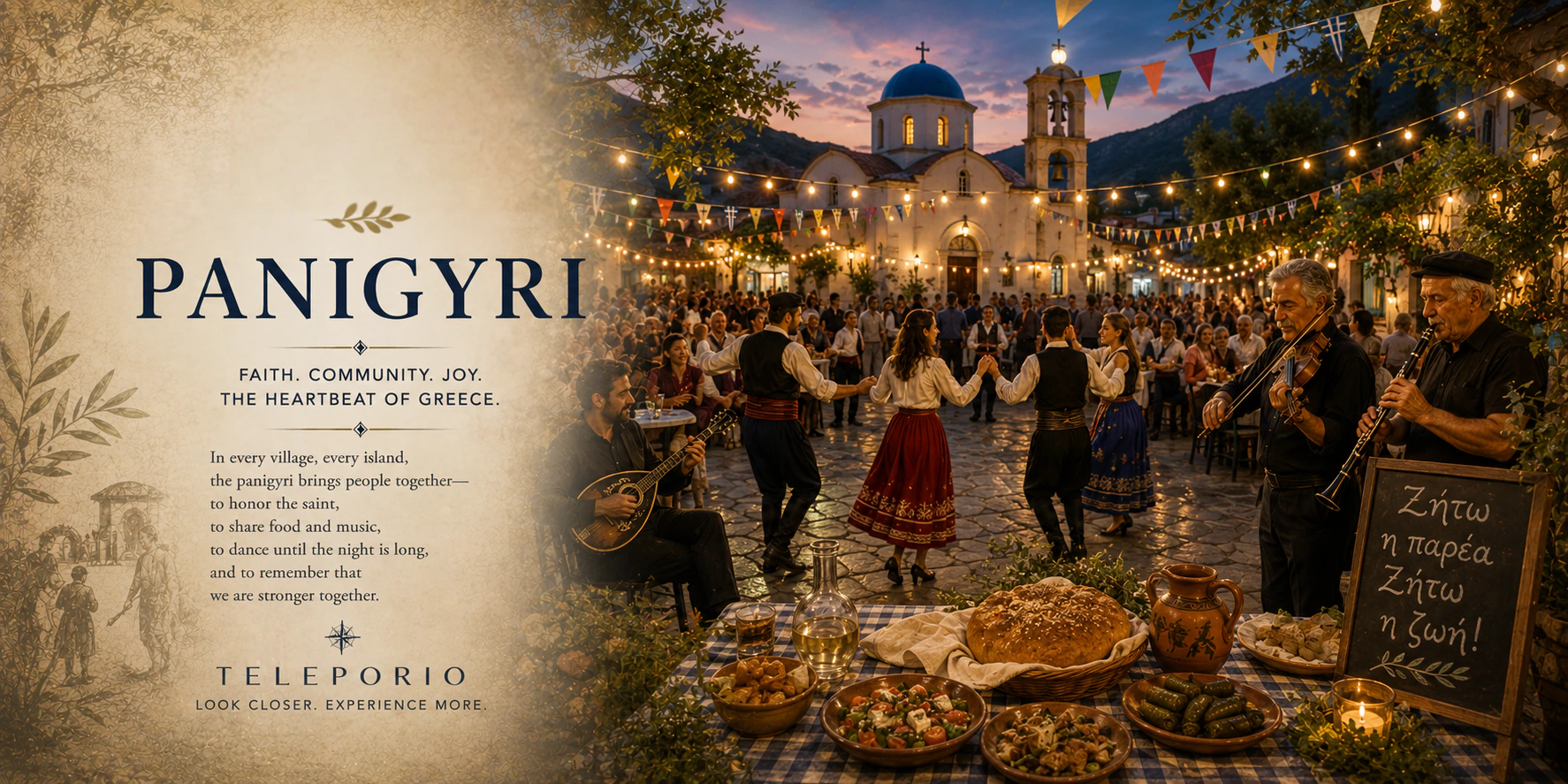
Original Teleporio editorial artwork
Saints & Tradition
What is a Greek panigyri?
A feast day, an all-night celebration, music and dancing in the village square. The panigyri is how a community celebrates the saint it belongs to — and how it remembers what it is.
Look closer →Original Teleporio editorial artwork
People
Who was Melina Mercouri — and what did she fight for?
Actress, exile, Minister of Culture. She turned the Parthenon Sculptures into a cause the world could not ignore.
Look closer →Original Teleporio editorial artwork
Music
Who is Giorgos Dalaras — and how does his work connect Greek musical traditions?
The full Teleporio artist profile follows Dalaras from his Piraeus and rebetiko roots through laïko, entechno and international Mediterranean collaborations.
Look closer →Original Teleporio editorial artwork
Music
Who was Marinella — and why did her career span so much of modern Greek song?
The full Teleporio artist profile traces Marinella's nearly seven-decade career across laïko, rebetiko, entechno and the changing stages of Greek popular music.
Look closer →Someone Who Knows This Place
Verified first-person contributions will appear only when the speaker, place and permission can be documented. No composite voices or invented quotations are used.
Who creates Teleporio, how it is produced, and why it exists
Who: Teleporio is responsible for this travel intelligence platform. Read About Teleporio for its background, purpose, and contact information.
How: Guidance is supported by documented provider data, marine forecasts, editorial review, and automation disclosures. Review the data sources, methodology, and editorial policy.
Why: Teleporio exists to help travelers make realistic decisions about Greek routes, timing, sea conditions, and journey tradeoffs. Report concerns through corrections and fact-checking.